Producers should proactively reach out to their roasters on Algrano. This applies to both customers, to build a relationship and improve retention, and leads, to convert their initial interest into a first order.
What you can learn online
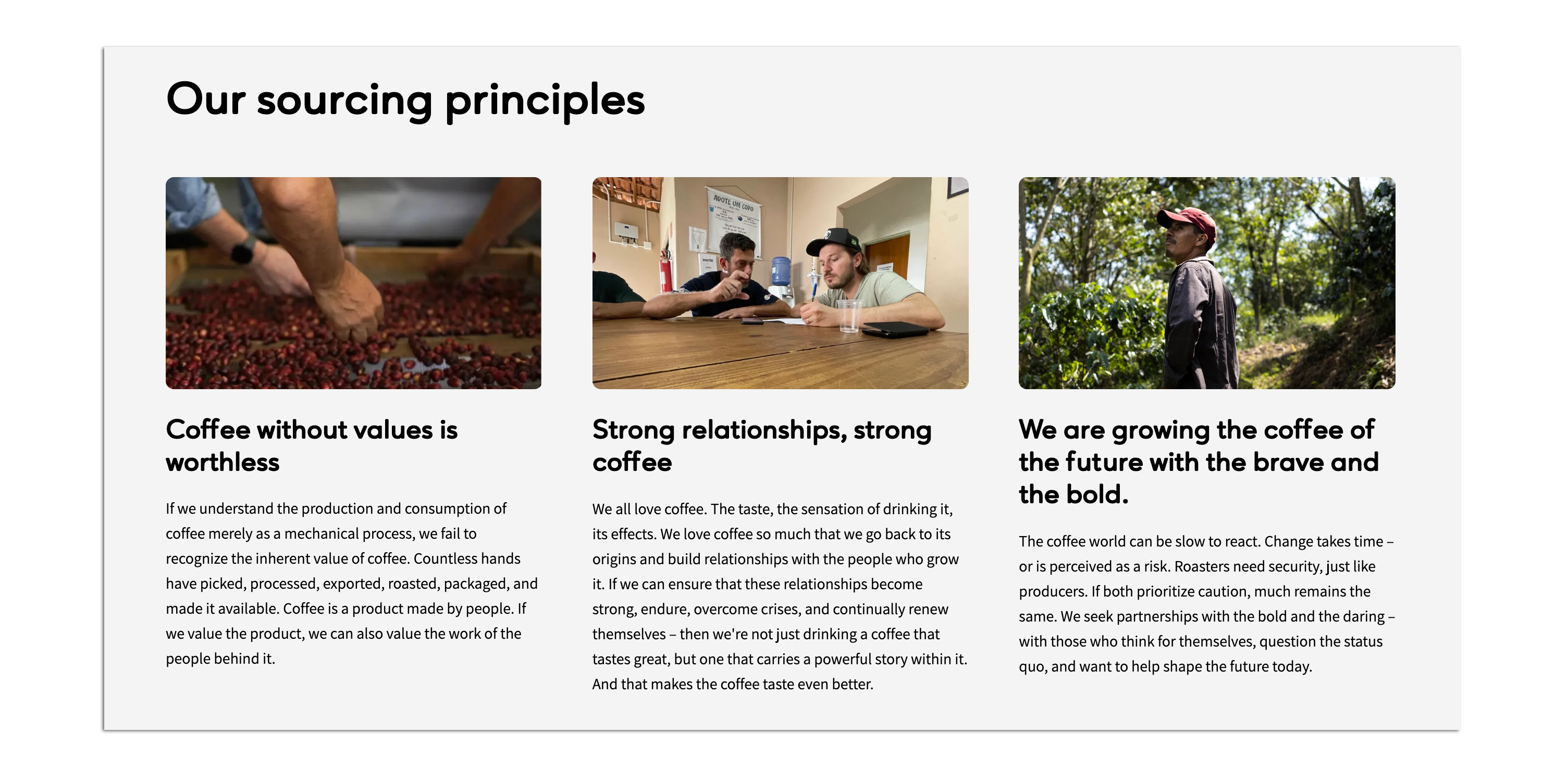
Their website and social media, especially LinkedIn, can tell you what’s their:
- Vision & philosophy: How they started, their "spark," their core mission, where they see the roastery in 2-3 years. This tells you if you have things in common and shared values.
- Sourcing structure: The main origins they buy from for their blends and the origins that feature seasonal filter coffees. This won’t show you everything they do, especially if they do white label, but it’s a good start. It tells you where your coffees could fit.
- Key people: Who is the green buyer, the head roaster, etc. This tells you who to talk to. It also helps you find podcasts or interviews.
After this, you can craft a personalized message that is more likely to land with the roaster, instead of what most people do: copy and paste the same message to everyone. It also helps if you want to recommend coffees.
How to get started
- Start with the roaster's website: an "about us" or "our story" page. It signals what they care about (direct trade, specific origins, certifications, awards). For example, if a roaster is B-Corp certified, you can lead with your sustainability credentials.
- Search LinkedIn: company name + "buyer," "head of coffee," or "director of coffee". This is often the fastest way to find out who is the buying contact or if they changed since you last spoke (a common reason why previously warm relationships go cold).
- Search for interviews, podcasts, or blog features citing the names of roastery founders or buyers that reveal sourcing priorities in detail.
- Check the roastery’s Google Business page as that might have pictures of their roasting machine, which tell you if it’s a big or small operation.
- Check Instagram for the roastery's day-to-day tone and recent activity: new equipment, a new location, a competition win, or a visible gap in posting can all be useful context before reaching out.
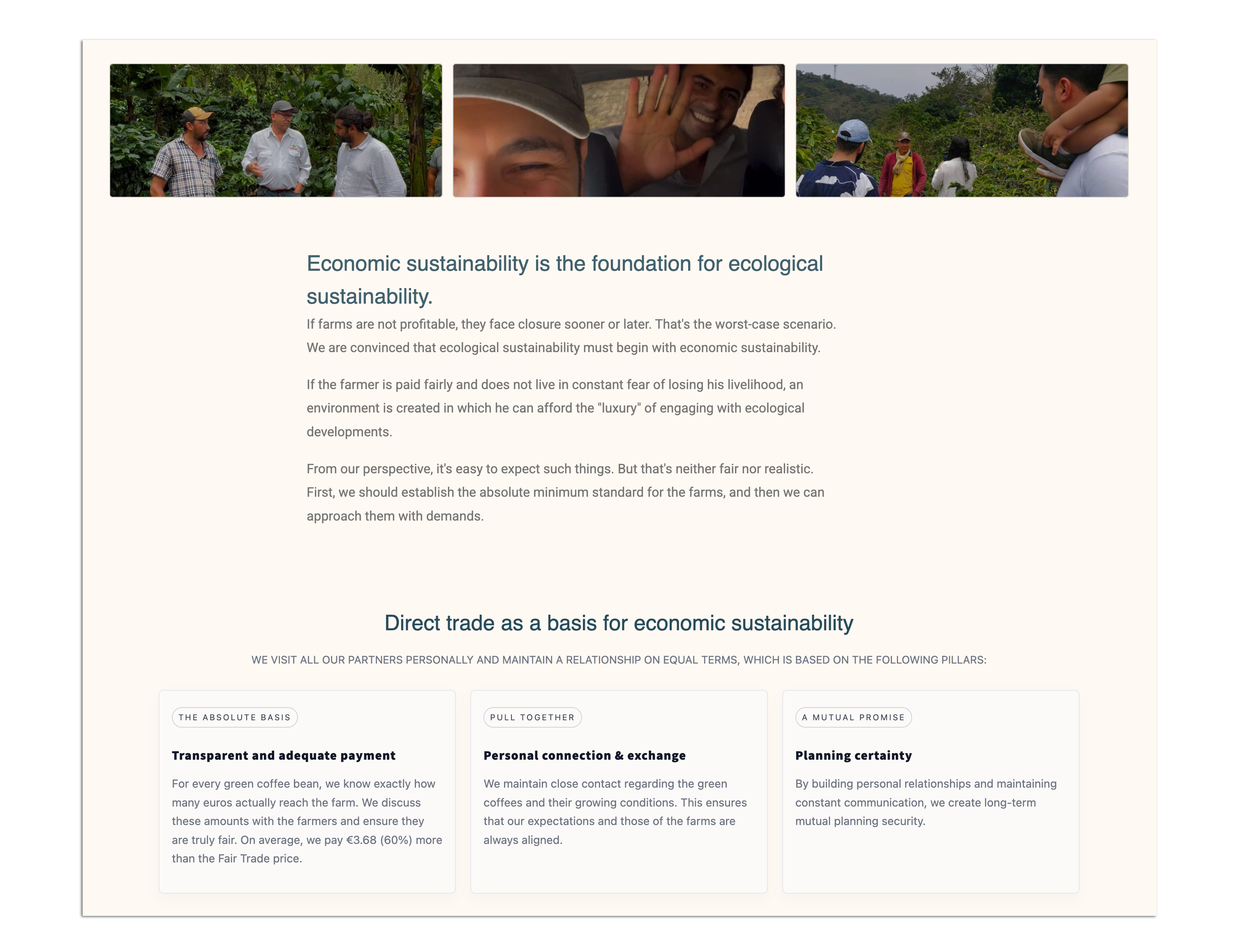
Conversation first, sales pitch second
This is the type of work done by the Algrano sales team before contacting a roaster so they can have a real conversation.
From there, the goal is to build that conversation to a point where you can talk about specific coffees and what to contract. But the conversation comes before the sales pitch.
It's important to have realistic expectations too: some good conversations won't lead anywhere, some outreach will go unanswered, and sometimes it will work. How often it lands depends on how well the roaster was researched and how you, the producer, follow through.
👉 Find more tips about speaking to roasters here.