
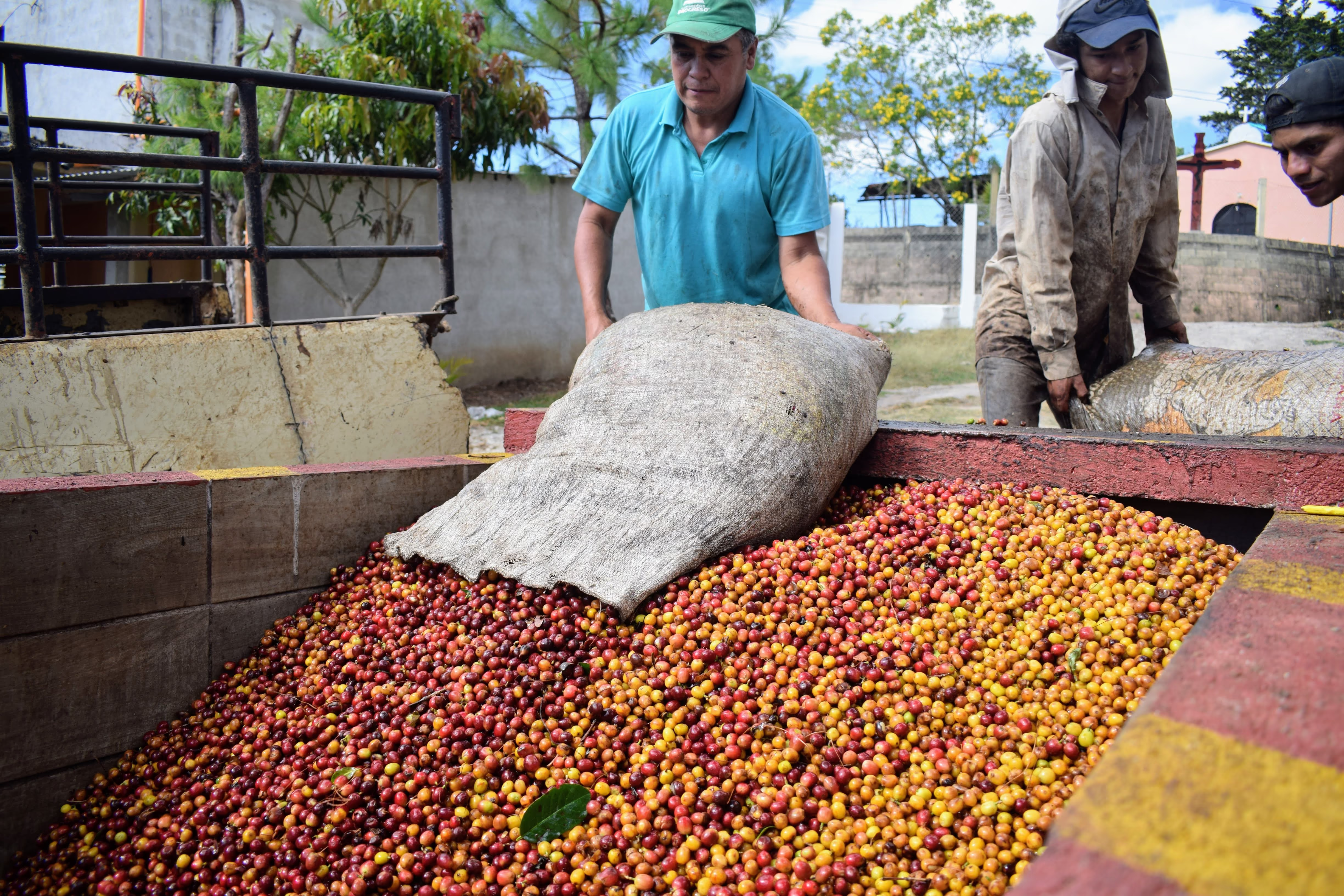
For roasters, the central question this year is reliability. Across the region, green coffee is not moving in a clear rhythm. In some places, harvest began earlier than expected, and export timelines have moved forward. In others, ripening has been slower, more staggered, or interrupted, meaning coffees that would usually be ready together are now arriving in smaller, uneven waves.
Volumes are just as mixed. Honduras is reporting growth in some channels, while Nicaragua is facing one of its tightest years in recent memory. Costa Rica, too, is navigating a much smaller harvest, with some regions reporting drops of 50 to 70 percent after last year’s unusually strong crop.
What makes this season especially important is that these shifts are not happening in isolation. Producers are also working through tighter liquidity, labor constraints, changing buyer behavior, and the ongoing effects of climate variability. Yet, even with those pressures, the partners we spoke with were consistent on one point: quality remains the priority.
Key Takeaways
- The Credit Crunch: At the beginning of the season, market prices were higher, which meant cooperatives and exporters needed significantly more liquidity to pay farmers. Since then, prices have eased. Even with the drop, access to working capital remains a constraint in many supply chains, so earlier commitments from roasters can still help producers secure the cash flow needed to process and ship your green coffee.
- Labour & Quality Risks: Labour shortages in Guatemala and Honduras are not just driving up costs; they are leaving cherries on trees longer. This increases the risk of Coffee Berry Borer (Broca), so the practical advice for roasters is to be extra vigilant for insect damage, especially on volume lots.
- Nicaragua’s “Off-Year”: The combination of rain-delayed flowering and a sudden cold snap has created a major supply gap. If you rely on Nicaragua for blends or core menu coffees, confirm volumes as soon as possible.
- Costa Rica’s Tight Supply: Costa Rica is also having a much smaller year, with some regions reporting harvests down by 50–70% compared to last year’s record crop. The season is finishing earlier, reflecting how little green coffee there is. Buyers are already requesting samples from February onwards, and stronger lots may move quickly.
- The 2026 Theme: This is a year of “staged commitments”. Because coffee is arriving in waves, bundling everything into a single shipment may lead to delays. If you buy volume, planning two separate shipping windows is the safest way to manage your inventory.
Harvest at a Glance: Volume & Timing Strategy
Because the harvest is moving at different speeds, your shipping windows will look a little different this year. Use the table below as a guide for your 2026 planning.
Production and Timing: What to Expect
“We have never shipped in December before.”
Sebastian Wiersma, Cafesmo Honduras
This year, timing is as important as volume. In Honduras, some channels are running four to six weeks ahead, creating an unusually early shipping window and giving roasters an opportunity to move sooner than expected.
In Mexico, Diego Porras of Solsticio Tierra describes ripening as “intermittent”: a short peak followed by a slower finish. The result is a stop-start harvest, where coffees that would normally move together may now be ready in separate moments.
In Nicaragua, the pressure is even sharper. Manfred Guenkel of Sajonia Estate Coffee says volumes are “about 35% less than estimated,” leaving less available coffee and far less room for substitutions later in the season.
Costa Rica adds another important signal. After last year’s strong crop, producers are reporting a much smaller harvest this year, especially in higher-altitude regions.
“Last year we had a record harvest. This year, the harvest has been quite low, around 50–60%, and in some regions up to 70% less coffee,” shares Eduardo Ramírez from La Victorina Coffee.
The offer is also shifting, with fewer washed microlots expected and more emphasis in some cases on honeys and naturals. For buyers looking for classic Costa Rican washed profiles, it’s worth starting the conversation early and confirming availability lot by lot.
Managing the Risks: Labor and the Coffee Berry Borer (Broca)
.avif)
Labour is not only a cost issue this year. It is a quality issue, too.
When pickers are scarce, cherries stay longer on the tree. That creates optimal conditions for broca, the coffee berry borer, to spread.
“Beans remain on the plant, and that’s where the coffee berry borer has food.” Obed García, Manager Export at CONEBOSQUE, Guatemala.
That means more insect damage, more sorting, and more pressure on mills to protect the final lot. It is one reason why partners are talking so much about stricter selection and tighter preparation.
Costa Rica presents a slightly different labor picture. Some producers have kept picking teams stable through long-standing relationships. La Victorina, for example, has worked with the same Indigenous community for nearly 20 years. They are clear, however, that this is not the norm across the country. And when workers arrive to find far less coffee than expected, many move on to other farms or regions. As a result, even when labor is available, low volumes can still make the harvest harder to manage.
Roasters’ Playbook: Four Questions to Ask Before You Book
Before you confirm on a contract this season, have a quick conversation with your producer or the Algrano team about these four points:
- Can I see the pre-shipment sample? Make sure you are tasting the coffee that is actually ready to go, not just a preliminary sample.
- What are our quality "must-haves"? Be clear about your requirements for moisture levels, defect tolerances, and bean size (screen size). Putting this in the contract keeps everyone on the same page.
- What is "The Plan B"? Agree in advance on what happens if a lot doesn't meet the sample, whether that’s a credit, a re-sort, or a replacement lot. Make sure your contract includes approval based on the pre-shipment sample (PSS), with clear replacement terms. If the PSS doesn’t match, you can request a new PSS or a replacement lot. Build a buffer into your timeline, as a second PSS typically takes an extra 7–10 days to arrive, cup, and approve.
- What can ship together right now? Ask which lots are already in the warehouse and which are still at the mill, so you can plan around what’s actually export-ready and avoid delaying your shipment while waiting for later-ripening coffees. Also, check the shared shipment calendar: if your volume shipment needs to leave earlier, you can still add micro-lots to one of the planned shared shipments later in the season.
.avif)
Why Your Partnership Matters
What stands out this year is not only the volatility of the harvest, but the effort behind it.
Producers are navigating lower volumes, tighter liquidity, and more unpredictable timing without letting go of quality. In Costa Rica, that pressure is especially visible among smaller and newer micro-mills, which often need to sell faster simply to maintain cash flow. Across the region, earlier buyer signals make a real difference.
“If we could get a customer who assures us they will buy the [coffee] production... We know we are protecting ourselves as a small agricultural company, protecting the next cycle.” Alvaro Lemus, Commercial Manager at Apolo, Guatemala.
That is the real story of this harvest. Reliability will not come from waiting for perfect certainty. It will come from earlier conversations, faster feedback, and more flexible commitments on both sides.
.avif)

.avif)