
Of all the messages producers send to roasters on the Algrano platform, only a third get a reply. This is despite the fact you can only message roasters who already ordered a sample, and that every roaster receives an email when you write to them.
Roasters cup lots of samples before choosing a coffee. Sometimes more than 10. And just because they ordered a sample from you, it doesn’t mean their interest is strong.
Roasters tend to reply more often when they mark the sample as a match: 40% of the messages get a reply in this case. This climbs to 56% when the roaster actually buys the coffee and receives a message after the order.
A few replies can still bump your volume
There’s nothing unusual about these numbers. Roasters get approached left and right by people trying to sell them coffee, and not everyone gets a reply. Producers shouldn’t feel demotivated by this.
A low reply rate doesn’t mean we can’t do anything about it. Sometimes, all it takes to bump your volume is one roaster.
The successful sellers on Algrano also get replies to a third of their messages. The difference is that they reach out a lot more than the average. We’re talking about 10 to 30 times more messages. Dozens of roasters engage and the producer has more chances to convert them.
Looking into the producers who get the most replies, we noticed they have some things in common. This is what they do...
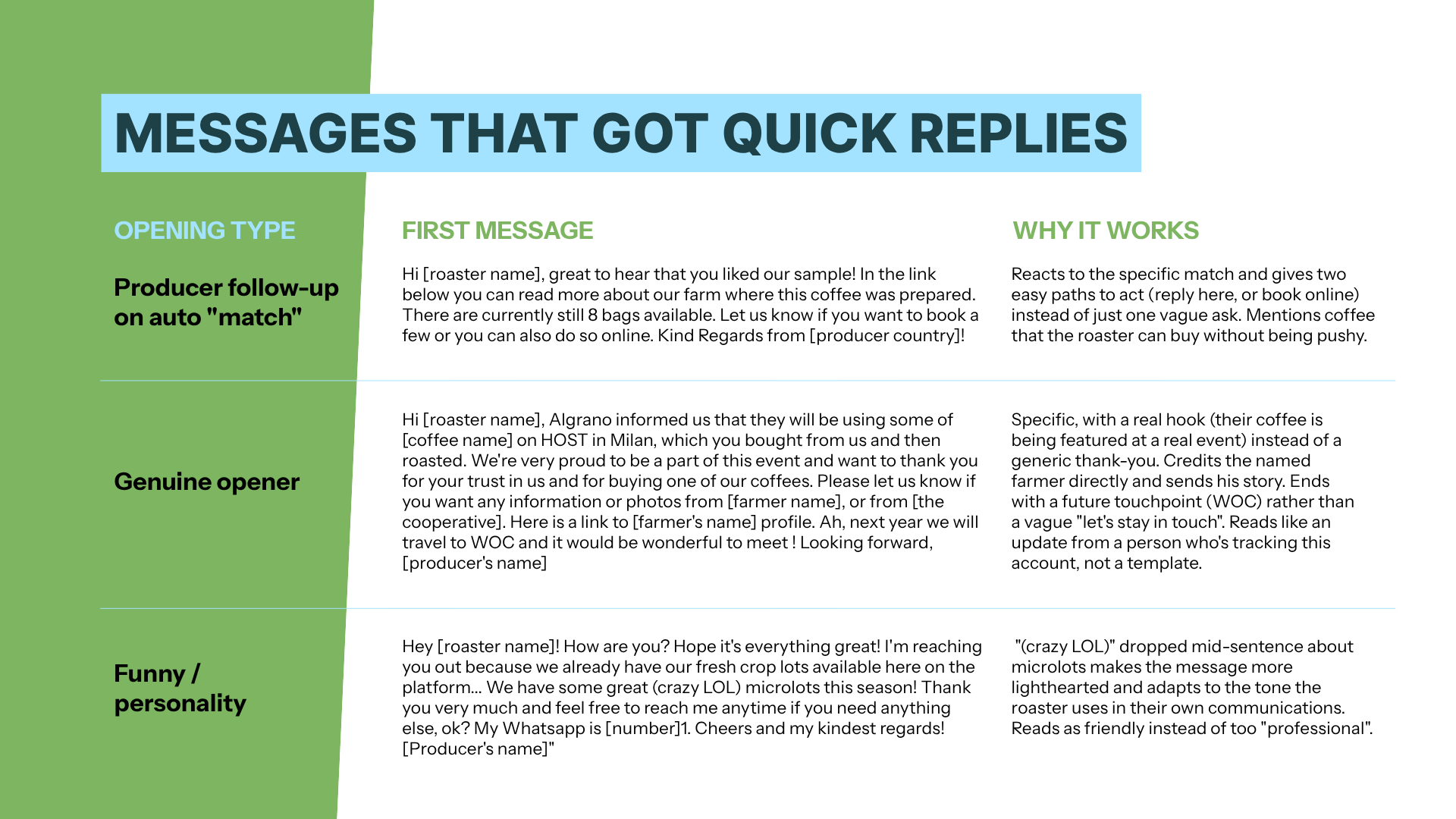
Best practices from our top sellers
They message everyone who marked the sample as a “match” within 1 day
This is a strong sign of interest and it means you’re more likely to get a reply. But you have to be fast and write to the roaster within 1 day, when they’re still “warm”.
Producers who do this are quick at messaging overall. They write to roasters who ordered samples between 10 and 20 days of the sample being shipped, something you can see in your account.
Our sales team recommends moving even faster, writing to roasters between 1 and 2 weeks after the sample is shipped.
Successful producers also message roasters who mark the samples as “no match”, as this helps them understand how the market perceives their coffee.
They personalise the message to each roaster
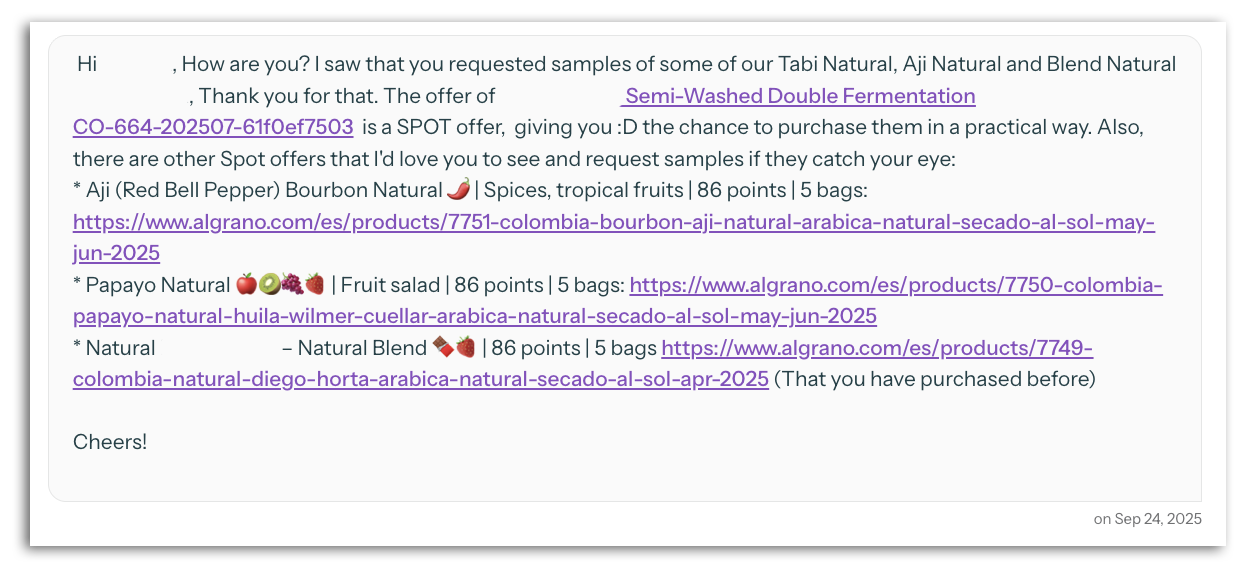
Probably the most important thing you can do. Personalised messages address the roaster by their name, not just saying “hello”. This shows you’re not copying and pasting the same generic message to everyone. It also shows you know who you are talking to.
Personalised messages also mention the coffee sampled and/or ordered by name. You can also make a reference to the country where the roaster is based (as in “I never thought I would see my coffee in France”).
Some producers will even pick words used by roasters in conversation (such as, “let me send you a sample of a more extravagant coffee, as you put it”) and add emojis to more humorous messages (“oh, no! The sample refills haven’t arrived yet - sad face”).
They write in the roaster’s language (or in English)
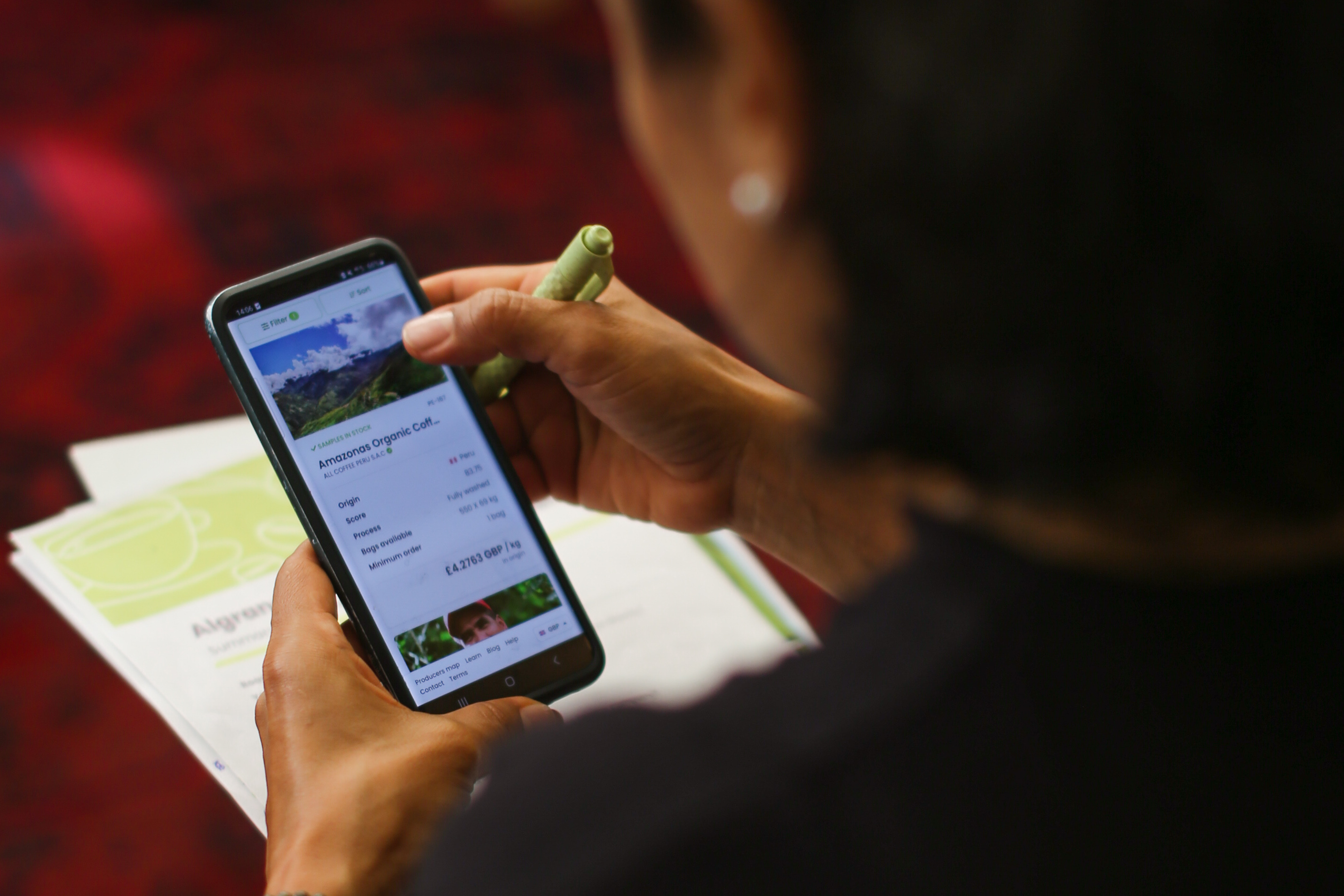
Whenever you open a chat to a new roaster, you’ll see a flag showing where they’re based. And yes, the platform has an autotranslate feature, but that makes a lot of mistakes. We suggest using AI tools, as they give you a very good translation in seconds.
Using the roaster’s language signals a few things: familiarity with their culture, effort and care in making communications easier, not to mention confidence.
They send brief harvest updates
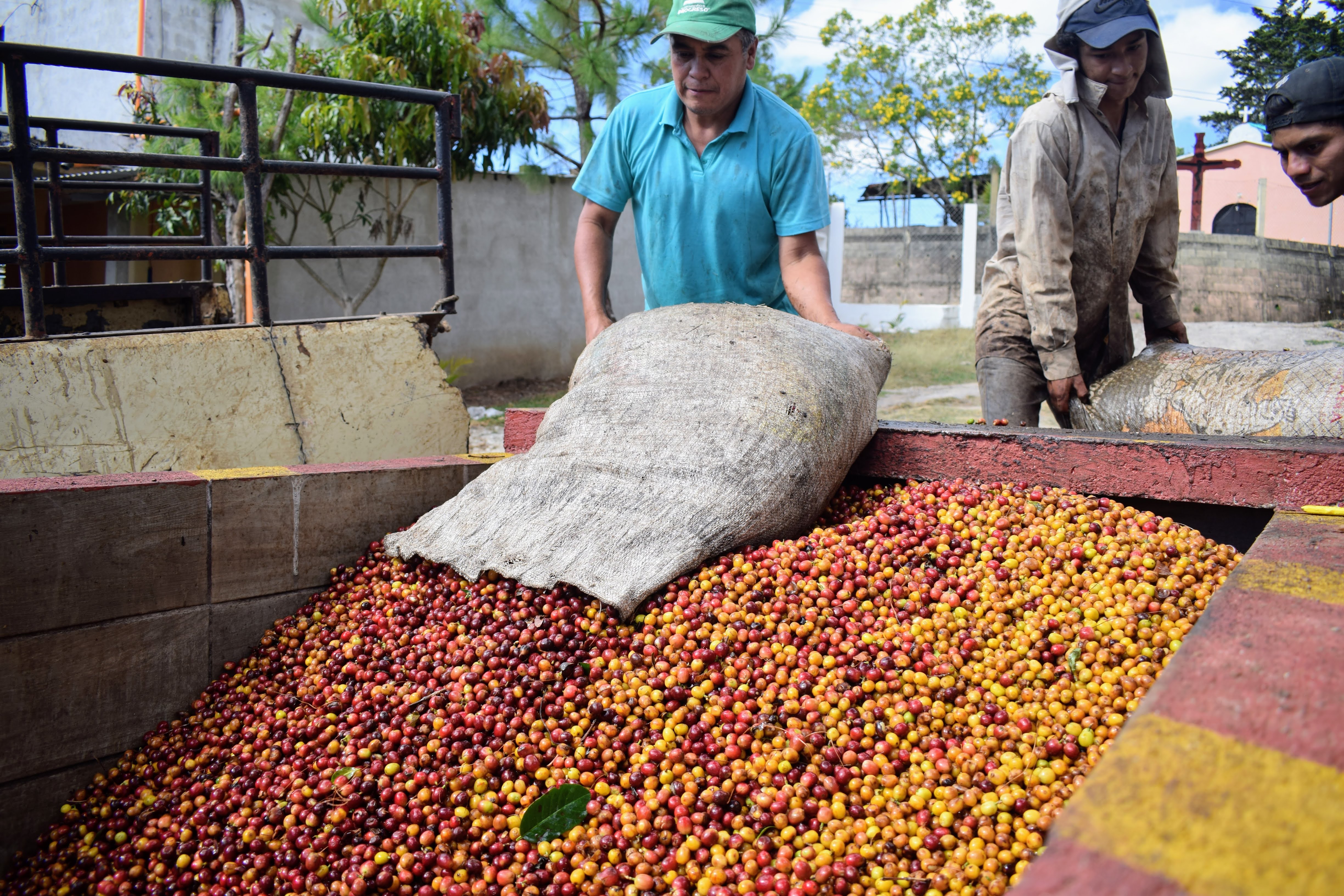
Experienced producers know that the harvest is a great time to speak to roasters. They rarely receive direct information from origin. Pictures of the new harvest, plus a few paragraphs about the expectations for volume and quality, plus an overview of the local market, are valuable attention grabbers.
They share links to offers
This may be the link of a coffee they bought before or something new. In this case, it works better when you know the roaster’s taste profile or if they buy certified coffee.
Some producers will even share the link to the offer of the lot the roaster just sampled, adding links that lead to more information about the coffee. If you use dynamic pricing or volume discounts, you can tell the roaster about it here.
They always have a call to action
A call to action isn’t simply “let me know what you think” or “I would love to get feedback”. You must make a specific request or provide something the roaster can read, download, or order. This creates a reason to follow up.
Common calls to action are a request to book an online intro call, a link to a special/exclusive offer, marketing materials, etc. It can also be an invite to join an auction, or a link to your harvest update.
They research the roaster
Pre-outreach research is the best way to tailor the message. You’ll get the name of the green buyer from the sample order, so you can learn what they are about, what the company stands for, what kind of coffees they buy, etc.
You can write your message referencing something you read about them, what you have in common, their sourcing principles, etc.
They name-drop an Algrano sales manager
You know each region in Europe and the USA has a sales manager at Algrano. They speak regularly to certain roasters, as much as capacity allows. Name-dropping someone from our team makes the conversation instantly more familiar to the roaster, because there’s someone in common you know.
They offer something which might help the roaster
Photos, coffee information, useful links, sustainability data… Successful producers give roasters material that helps them promote the coffee before they even ask.
Some producers also share full offer lists with coffees that are not listed on the marketplace. If a roaster is interesting, you can send a list of other coffees you produce to peak their interest. This is especially helpful if they already bought a coffee. All coffees should have an FOB price.
They message the roasters via other channels too
Not every roaster checks their Algrano account regularly, and it’s easy to forget there’s a message waiting in the inbox. Some roasters are more active on Instagram and LinkedIn. If you didn’t hear back from them on the platform, message the roaster on their social media.
You can always ask for their work email and even their phone/WhatsApp number, though it’s more natural for the conversation to move to these channels after they bought a coffee.
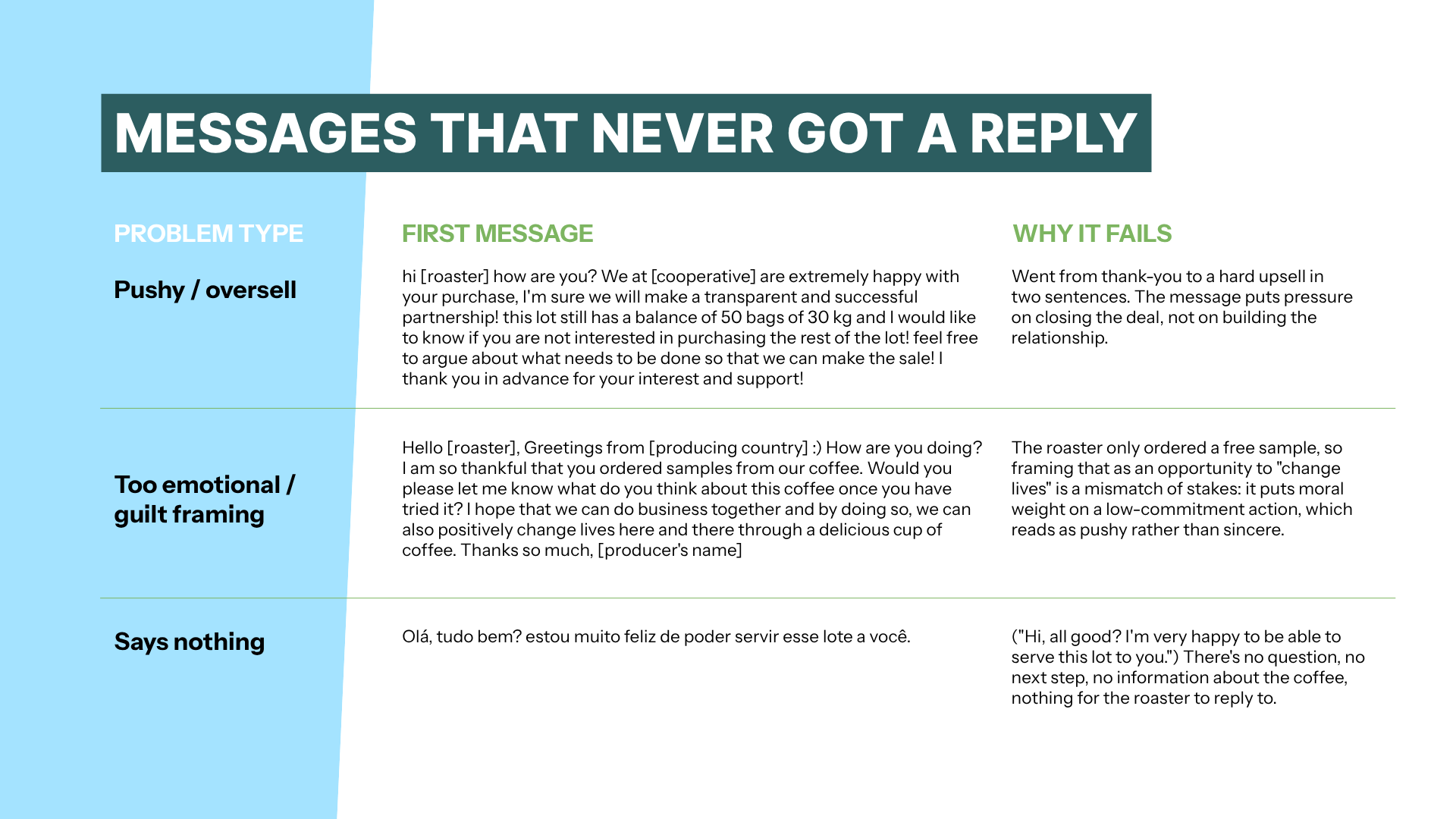
Things to avoid:
- Sending the same generic message to everyone.
- Jumping straight into a sales pitch, with messages like “would you like to buy 100 bags of this coffee?” or “When do you want to place your order?”.
- Not saying hello or introducing yourself before asking a question.
- Writing only “Hi. How are you?” and nothing else.
- Making an emotional pitch when the roaster only ordered a sample, like “your order makes it possible for us to support the community” or “We would love to give you with the opportunity to change lives”.
- Being pushy overall and asking for roasters’ WhatsApp number multiple times, even after they said they prefer talking through the platform.
.png)