I'm going to come right out and say it: blends are the unsung hero of specialty coffee, and most roasters aren't giving them nearly enough credit. I feel strongly enough about it that I wrote an article on the topic for the June 2026 issue of Roast Magazine.
As an industry, we pour so much attention into single origins, exclusive microlots and individually high-scoring coffees. Nothing wrong with that. But in the process, we often overlook the power of the blend. The best blending roasters I know are intentional about it. They're creating something new, and something their customers can rely on.
Single origins are often promoted as representational: of an origin, a region, a farm, a variety or a processing method. Blends can go further. You can design them to fill a spot on your menu, hit a precise flavor profile, and help sustain your business.
Before we start, there is no wrong way to build a blend, and as long as you end up with a product that you and your customers enjoy, that’s the right way.

Why do roasters make blends?
Working roasteries generally build blends to answer four operational needs:
1. Customer trust and loyalty. Single-origin buyers love novelty. They want a new flavor experience almost every week. Your blend drinkers are the most loyal customers you have, and often the ones with the highest lifetime value. That might be a wholesale cafe whose customers expect the same espresso every day, or a home subscriber who wants their coffee to taste familiar and comforting every morning. A blend lets you maintain that sensory consistency.
2. New flavor creation. You can build something that doesn't exist in any single lot. One coffee might have incredible floral aromatics and bright acidity but lack body or sweetness on the finish. Another might be thick, syrupy, and fruity but lack complexity. Blend them, and you take the strengths of each to make something more dynamic than either was on its own.
3. Price accessibility. Green coffee prices swing a lot from coffee to coffee. If you build a menu entirely around expensive microlots, your margins can be hard to manage. Blending lets you average costs: spend a bit more here, save a little there, and price the blend accordingly so customers get a great coffee at a decent price point. I'll add that flavor synergy, meaning how the coffees work together on the palate, should drive these decisions more than price does. But price is a legitimate consideration.
4. Performance under demanding conditions. Think about how much of a coffee shop's volume goes out as batch brew and espresso compared with pour-overs. Blends are a huge volume driver, and they have to stand up as a black coffee, as a straight espresso, or against milk in a 12 oz latte. Depending on how you compose them, blends need to meet a lot of different customer needs at once.
So what actually is a blend?
It's less defined than most people think. Trace any coffee back to the farm, and you could argue it's already a blend: a producer picks cherries across the whole harvest and may combine lots from different days or weeks to get a bigger volume. A washing station in Ethiopia or a co-op in Peru might receive cherries from 200 or 300 smallholders and sell it as one regional lot. Is that a single origin because it comes from one place, or a blend because it comes from many growers?
At the end of the day, it doesn't matter much, because as a roaster you buy the lot you want. The practical definition I use is this: a blend is taking distinct green lots and deliberately combining them to create a new roasted product.
That can happen in an infinite number of ways.
Coffee Blend Examples:
- A Central American base paired with an African coffee. Colombia and Ethiopia blends are common.
- Single-country blends, like half Ethiopian natural and half Ethiopian washed.
- Single-farm blends, where a roaster buys a washed and a honey from the same producer and blends them at roasting. Some people would call that a single origin. If the roaster is doing the blending, I'd call it a blend.
- Traditional espresso, often from Brazil and Colombia, sometimes with a specialty-grade conilon (robusta) from Brazil for intensity, full body, deep chocolatey notes, and a bigger caffeine hit.
- Half-caf and low-caf blends, which I've seen more of in recent years for customers limiting their caffeine.
- The original: Mocha Java. It's named for the two ports the coffee traveled through in the 1600s and 1700s, Mocha in Yemen and Java in Indonesia. Those were the only two coffee options at the time, so roasters started blending them and found they liked the more balanced profile better than either coffee alone.
Designing the recipe: ratios and roles
First, where should you start?
I generally advocate keeping it simple, with two or three components.
With four, five, or six coffees, workflow and green inventory get difficult to manage, and each brewed cup may taste a little different. Think about an 18 g espresso dose: the more components you have, and the smaller their share (10% or less), the more likely each dose contains a different configuration of beans. I have seen larger blends done very successfully, so play around and see what works for you.
Second, think of each component as having a specific role.
The base (or anchor). This is the foundation. Its job is to provide body and sweetness, contribute to solubility, and bring price stability. Generally, natural or pulped natural Brazils and clean, low-acidity Central American coffees usually fill this role. In an espresso or breakfast blend, this is the component that stands up to milk or cream. It's usually 50% or more of the blend.
The second component. This brings structure and contributes significantly to the flavor profile you're after. For a mild, rich daily drinker, a Costa Rican honey or a washed Central or South American coffee can add clarity. For something punchier, an experimentally processed Colombian or a Kenyan natural can add a pop of fruit or acidity that complements the base. This is often 30 to 50% of the blend.
The accent. If you go for three components, the third is the extra something. Building a holiday blend? A coffee with cinnamon or warming-spice notes can make it stand out. If thermal shock or co-ferments are a bit much on their own, a small share in a blend can add unmistakable flavor clarity. The accent is usually 10 to 30% of the blend.
Coffee Blend Ratio Examples:
- 50/50 or 60/40, where two components complement each other. This is typical for house drip: a balanced washed lot with a natural, for a sweet, forgiving, comforting cup that stays consistent all year.
- Roughly 50-60 / 25-35 / 15-25 for espresso: a natural or washed base, a higher-acidity second component, and a sweeter or more expressive top-off.
- 1/3, 1/3, 1/3, where one component brings body and sweetness, one brings acidity, and one brings fruit or aromatics, all in equal measure.
The options are as endless as the number of coffee lots in the world, and every coffee plays a little differently with the others.
Pre-roast or post-roast blending?
This is a heated debate in the roasting community, and a lot of roasters have very strong opinions. For me, there isn't one right way. I know world-class roasters who blend pre-roast, others who blend post-roast, and some who do a bit of each depending on the coffee and the result they want. What works for you should be anchored in your roastery's philosophy and workflow.
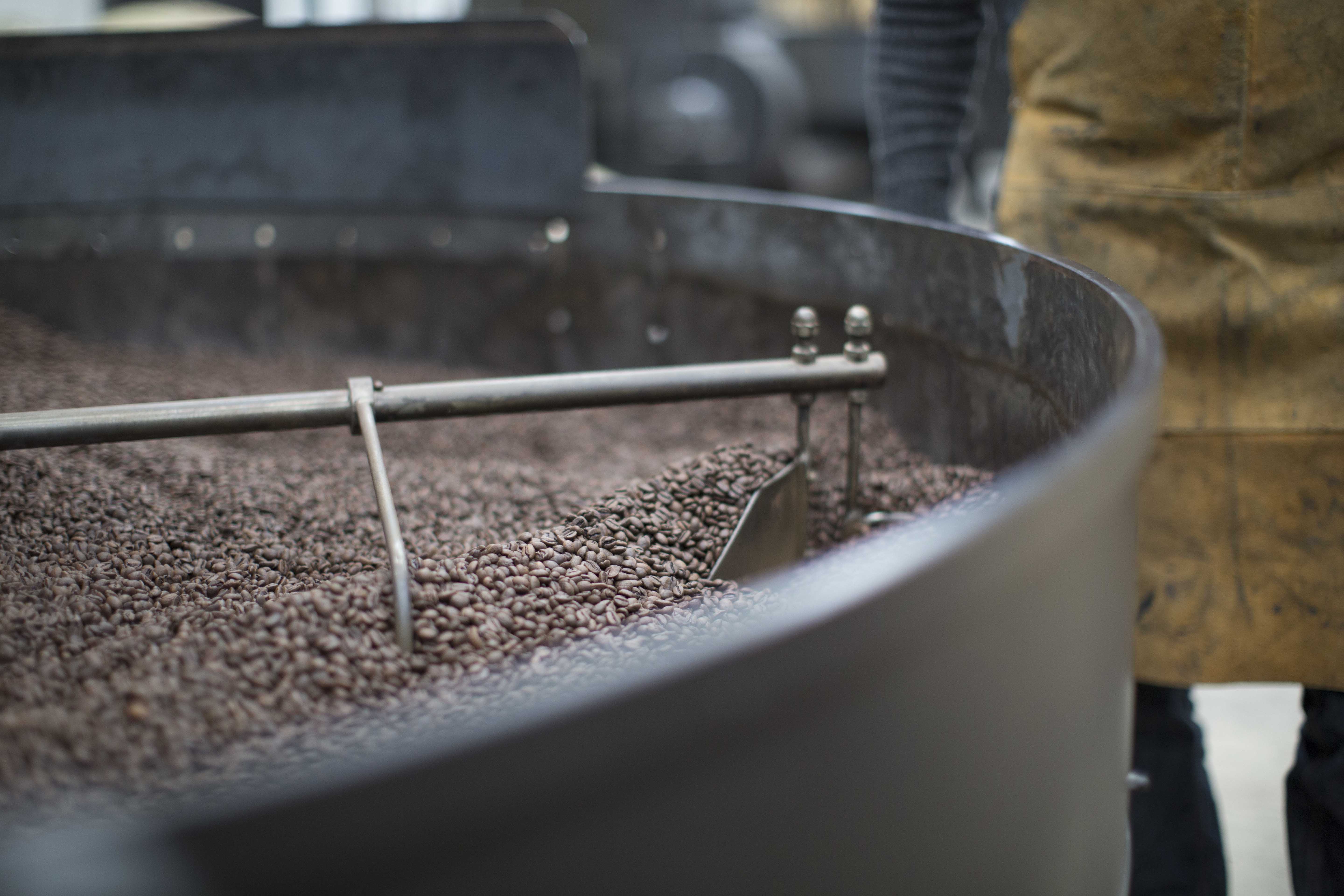
Pre-roast blending means weighing your green components together and roasting them in a single batch.
- It streamlines warehouse logistics: you weigh the components once, and you're done.
- It eliminates half-full tubs of roasted coffee sitting around cluttering the roastery.
- You don't need extra mixers, or the time and cooling-tray space to do the mixing.
- I've heard from several production teams who ran blind cuppings and triangulations comparing pre- and post-roast versions of the same coffees. They either couldn't reliably tell them apart, or preferred the integrated pre-roast batch. That's anecdotal, but interesting.
- The caveat: choose coffees with compatible physical characteristics, mainly moisture and density, because beans can absorb heat differently in the roaster. I believe you have more flexibility in air roasters, where efficient convective heat transfer can make up for some of those differences. Do your own tests on your own machine.
Post-roast blending means roasting each component individually, then combining.
- You have absolute control over each roast profile, so you can dial in each coffee independently.
- It allows dual-use inventory: one coffee can be a single origin and also a blend component, as long as the roast profile works for both.
- The downside is that it multiplies your touchpoints. You're weighing and moving each coffee several times, and it takes warehouse space. It demands tight inventory management of both green and roasted coffee.
In the end, let your workflow and your cupping results guide you, then roast, blend, and taste.
How do you know what will taste good together?
One way is the cupping table. Sample roast a few coffees you're considering, set up a standard cupping, and taste them on their own. Then make tabletop blends: grab an empty cup and add two scoops of this and two scoops of that for a 50/50. You can test different ratios this way and see what stands out. When does the base overpower the accent? When does the acidity get lost? It's a great way to try a lot of ratios at once.
When it comes time to roast and blend for production, the coffees may behave a little differently, but a cupping like this gives you a starting point to build from.
If you blend pre-roast, you can also sample roast the components together. That shows you how they actually behave in the roaster. Do they take on heat in a similar way? Does one coffee get darker and more brittle while the other lacks development?
Sourcing green coffee for a blend program
Just as there's no single right way to build a blend, there's no single right way to source for one. But since one of the main benefits of blends is flavor consistency, source with that in mind.
- Choose coffees with easily achievable flavor profiles, like standard washed Central American coffees, so you can swap lots throughout the year. Coffee is seasonal, and you want availability to affect your year-round blends as little as possible.
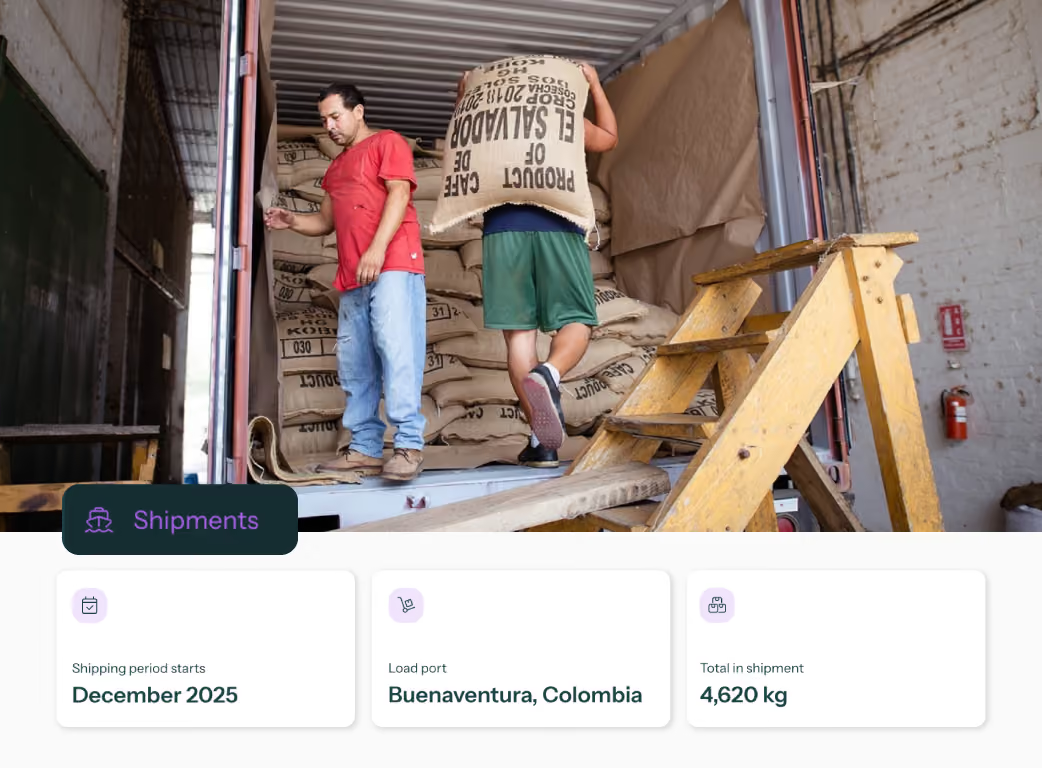
- Buy your biggest components to last all year. It takes planning ahead, but it makes sure your blend is made of the same coffee, and it locks in your price early so you can budget much more accurately.
Happy sourcing and happy roasting,
Kat Melheim.