

.avif)
.avif)
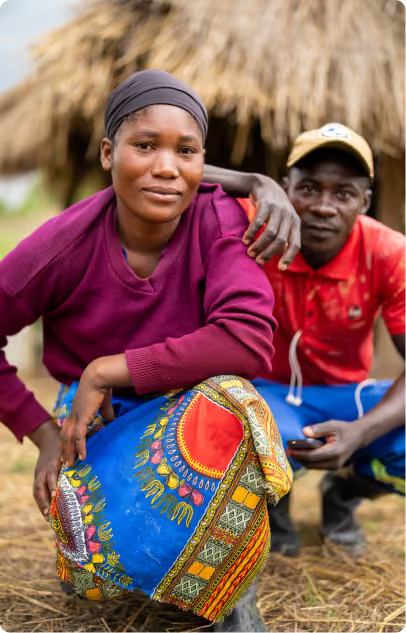
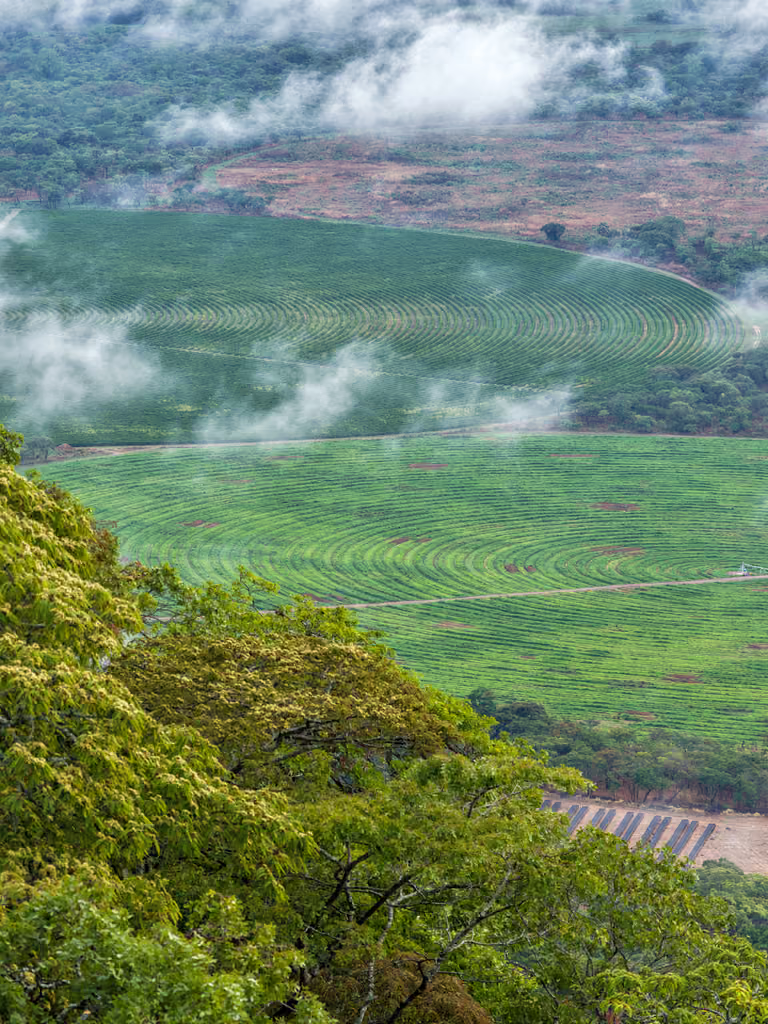
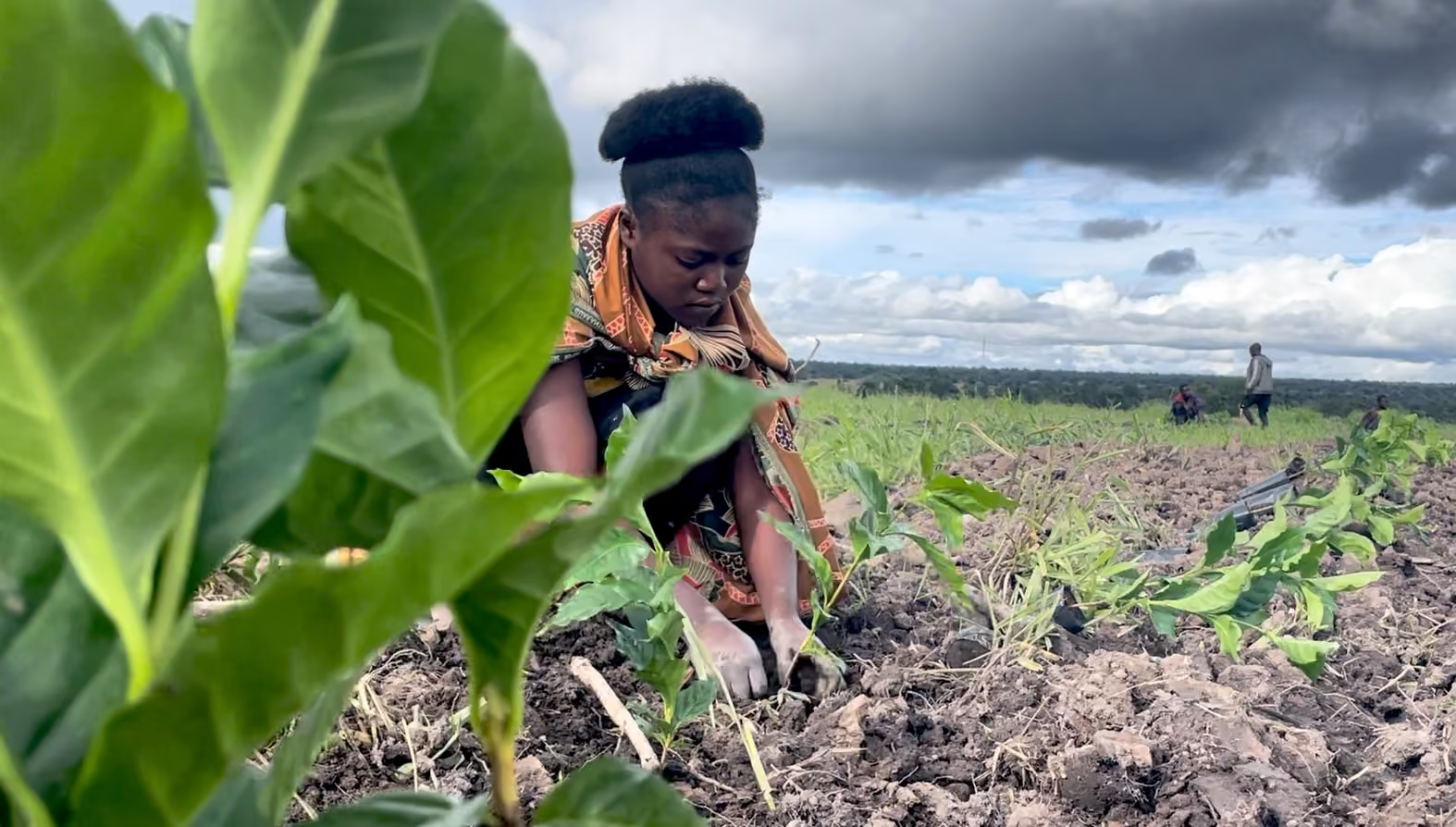
Source: All images and information on this page are from Mount Sunzu.
A false start, and a second one
Coffee isn't new to Mbala. Settler farmers were already growing it in the district before 1950, and the plot Mount Sunzu farms today was itself a coffee plantation in the 1940s, before it shifted to other crops and was eventually left fallow.
Zambia's modern coffee industry began later, in the 1970s, and expanded significantly during the following decades.
The reason was economic diversification, not just coffee. Zambia's economy had long depended heavily on copper. When falling copper prices exposed the risks of that dependence, developing agriculture and new export crops became part of a wider effort to diversify the economy. Coffee was one of the crops identified as having potential.
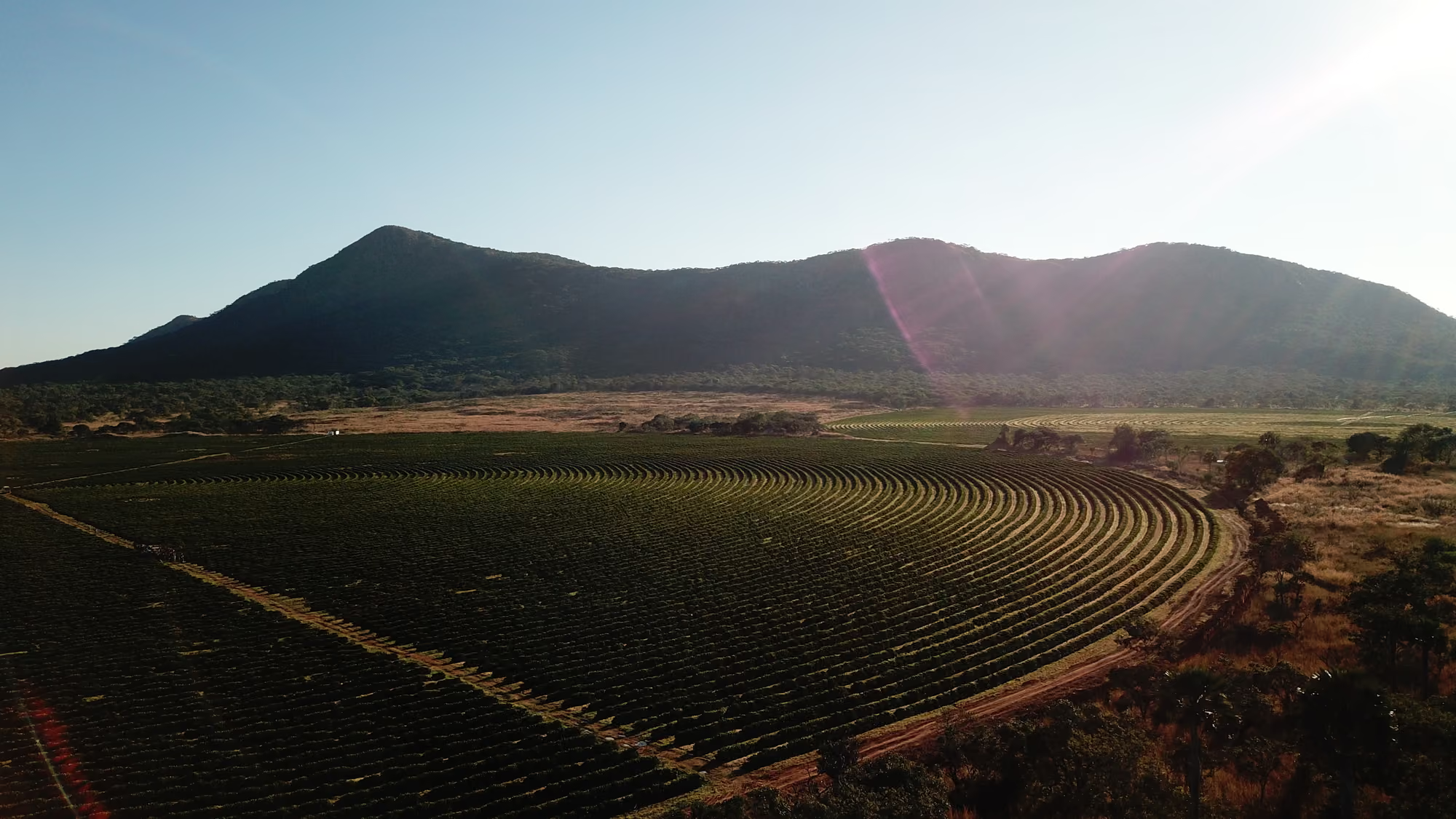
With support from the Zambian government and World Bank coffee programs, Zambia developed a commercial coffee industry that drew heavily on Kenya's established production and grading systems.
From the outset, the focus was Arabica. Zambia's Coffee Act established Arabica as the coffee species permitted for commercial cultivation, making the country an unusual Arabica-focused origin. The industry was also developed around high-quality fully washed coffee for export markets. This helps explain why fully washed processing remains the dominant style in Zambia today, even as producers begin to explore natural and other processing methods.
National production climbed for decades, peaking at around 6,500 tonnes in the 2004/05 harvest. Then the funding dried up, and a severe drought in 2005/06 pushed many smallholders to uproot their trees for crops that offered faster and more reliable returns.
Coffee is a long-term crop that requires considerable investment before reaching commercial production. In Zambia, this challenge is compounded by a pronounced dry season, which makes access to irrigation important for many commercial coffee farms. Annual crops can offer farmers a quicker return on land, labor and capital. Output collapsed to just 180 tonnes by 2015.
Today, Zambia remains one of Africa's smaller coffee origins, with production concentrated in a small number of estates. What is beginning to change is the ambition behind some of Zambia's coffee production, shifting from volume toward specialty quality. Rather than rebuilding the sector around volume alone, there is growing attention on specialty quality, traceability, processing, variety selection and closer relationships with buyers. Mount Sunzu is representing Zambia in this emerging chapter.
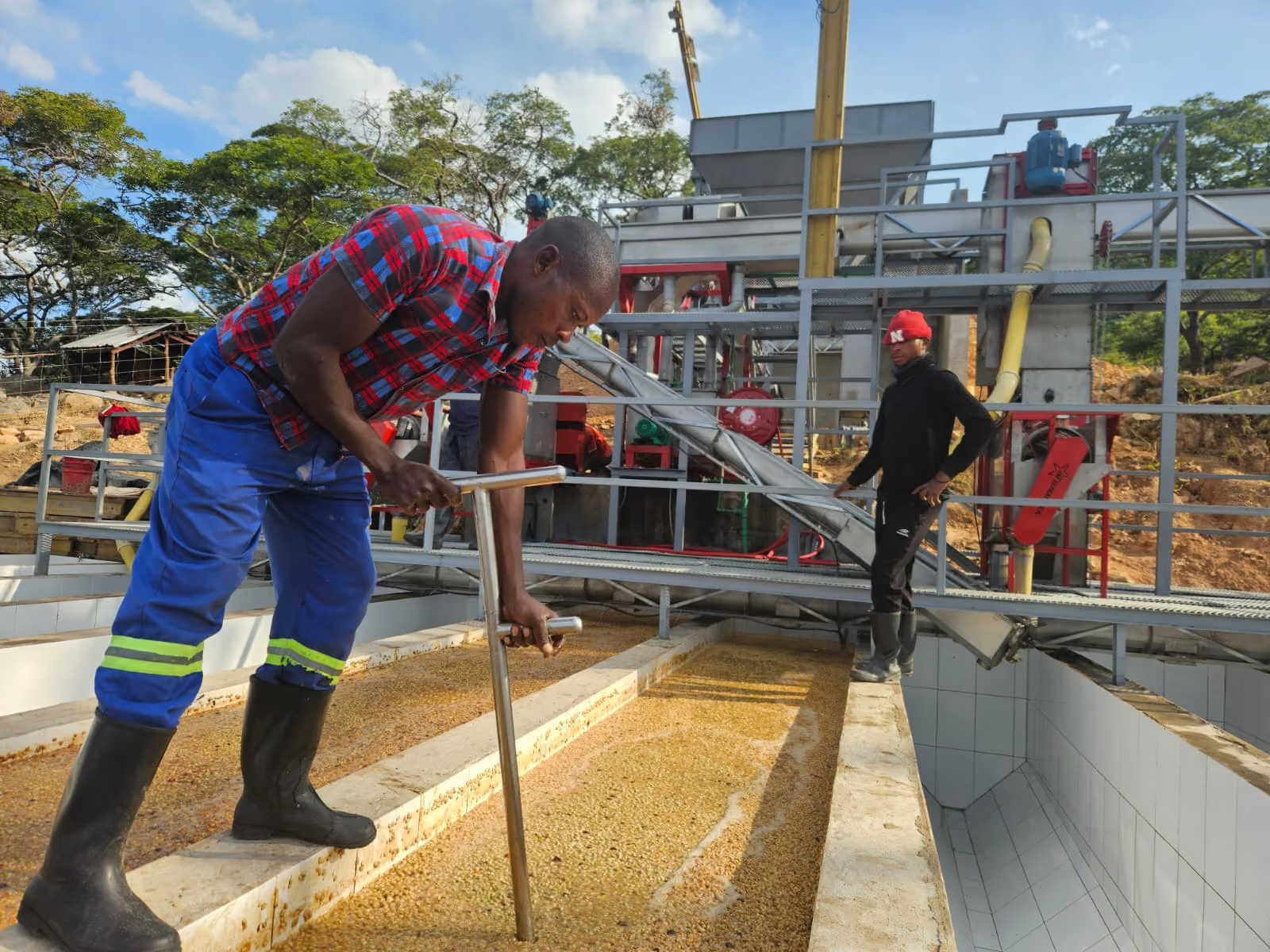
Where Zambian coffee grows
Nearly all of it comes from the country's Northern Province, spread across a handful of districts along the Muchinga escarpment. Kasama, Mbala, Nakonde and Isoka are among the main producing areas. A handful of estates also operate further south, near Serenje and Lusaka.
Altitude separates the good lots from the average ones. Most Zambian coffee grows above 1,200 meters, with the best lots well past 1,500. Mafinga Central, on the Malawi border, is usually cited as the country's highest point, at 2,339 meters. The peak behind Mount Sunzu's farm, the highest ground in Mbala district specifically, reaches just over 2,000 meters.
The harvest runs from May to September, squarely inside Zambia's long dry season. This can be an advantage during processing because cherries and parchment can dry without the frequent rain that complicates drying in wetter origins.
The same dry season also makes water management important during production. Coffee trees need to pass through several months with limited rainfall, so irrigation can play an important role in maintaining consistent production and supporting flowering, cherry development and plant health.
Most Zambian coffee is fully washed, though a growing number of farms, Mount Sunzu included, are experimenting with naturals.
Older Kenyan-derived varieties such as SL34, together with Catimor types, form part of Zambia's traditional coffee landscape. At the same time, newer varieties such as Starmaya and Marsellesa are now being planted commercially and are helping broaden the country's variety base.
Zambia does not yet have the immediately recognizable flavor shorthand associated with origins such as Kenya or Ethiopia. Its washed coffees are generally associated with clean and balanced cups, medium to good acidity and medium body. Depending on variety, location and processing, profiles can move between citrus and fruit, chocolate and caramel, with occasional spicy characteristics. As Zambia's specialty sector develops, its sensory identity is still being defined.
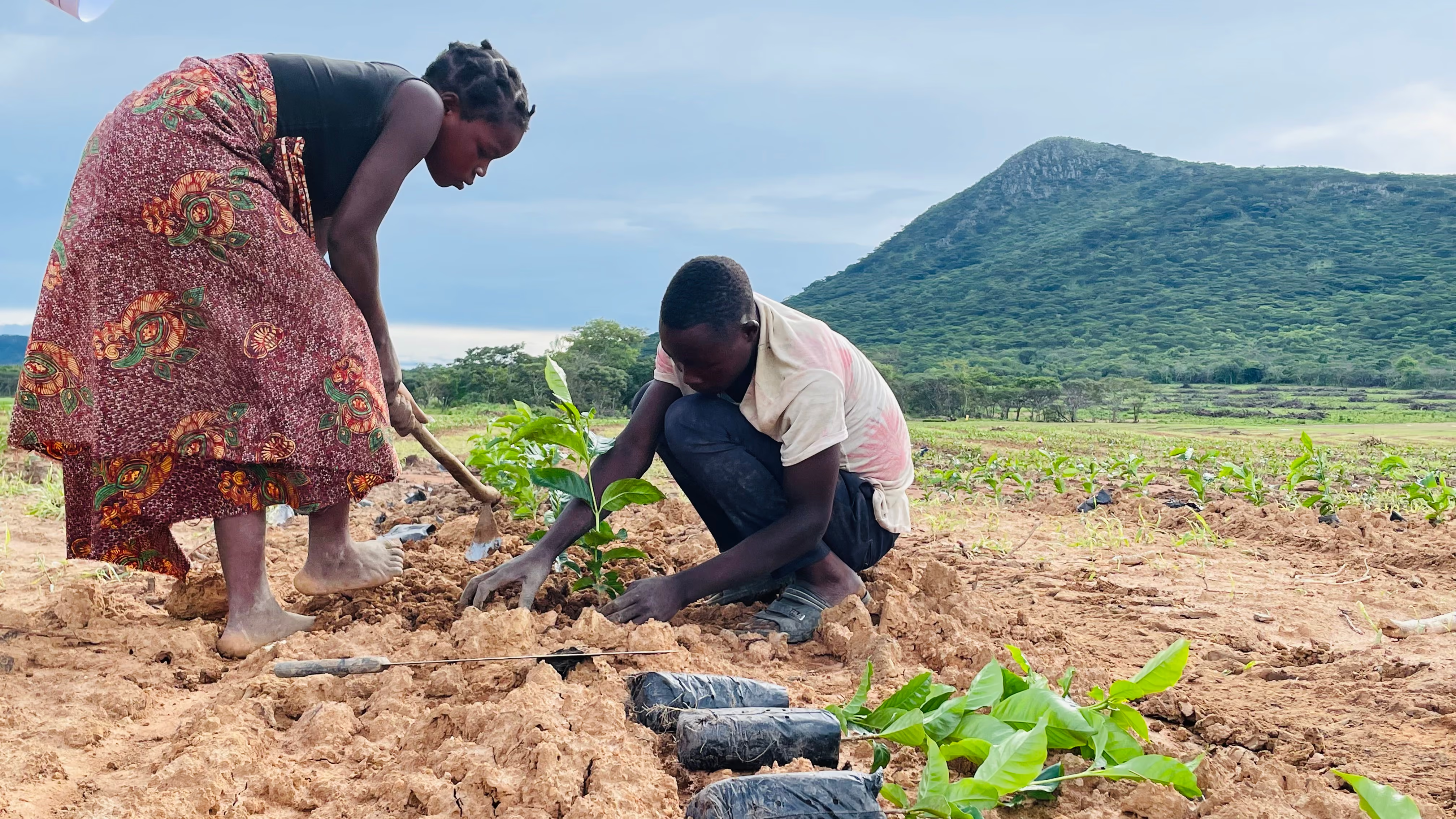
A specialty origin rebuilding its presence
Zambia's specialty coffee sector is still small, but its presence within the wider African coffee community is becoming more visible. The Zambia Coffee Growers Association, ZCGA, represents growers and participates in the African Fine Coffees Association, AFCA, connecting Zambia with producers, buyers and coffee organisations across the continent.
Zambia is also participating in AFCA's Taste of Harvest program, which provides a platform for coffee quality assessment, national competition and exposure to international buyers. These initiatives matter for a small origin because building a specialty reputation depends not only on producing good coffee, but also on creating the institutions, quality systems and market connections that allow buyers to find it consistently.
A small domestic specialty coffee scene is emerging too. Businesses such as Bush Brew Coffee and LoLo Coffee are part of a growing group of Zambian coffee companies helping create more visibility and interest in coffee within the country itself.
It is still early. Zambia is unlikely to compete with Africa's larger origins on volume, and that may not be where its opportunity lies. The emerging specialty story is about producing coffee with greater control, understanding how varieties perform in Zambian conditions, improving processing, building traceability, and developing the consistency that allows roasters to return from one harvest to the next.
This is where Mount Sunzu comes in.
From its farm in Mbala, Mount Sunzu manages the coffee from cultivation and harvesting through wet processing, dry milling, grading, and preparation for export. Its Starmaya and Marsellesa coffees offer a window into what this next chapter of Zambian coffee could look like. The ambition is not only to rebuild volume, but also to put Zambia on the map as a distinctive specialty origin. And roasters looking for something genuinely different have reason to pay attention.